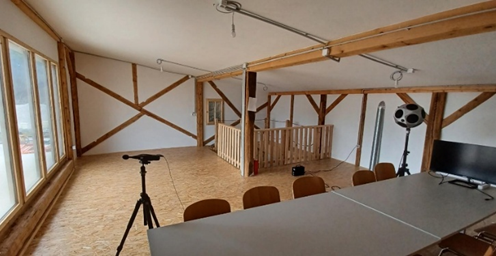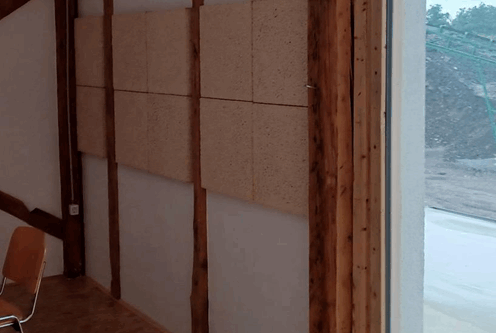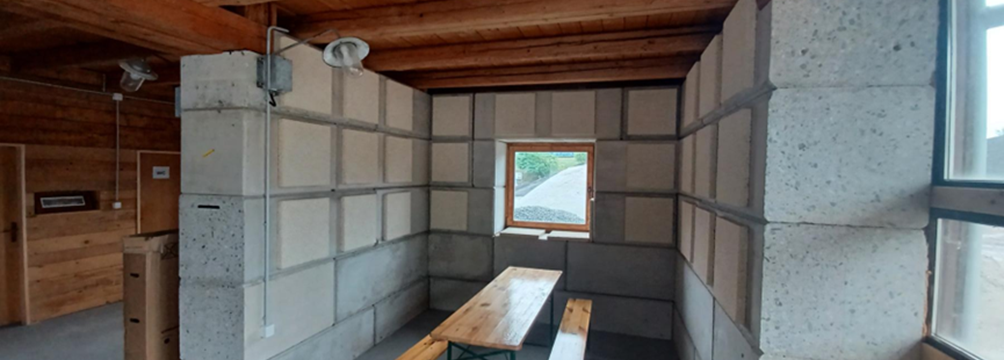
The pilot installation of sustainable acoustic panels was carried out within Activity 2.2 – Upscaling and testing of green and bio-concrete products. This activity focuses on the transnational upscaling of green concrete made with 100% recycled aggregates and bio-based concrete solutions, including hempcrete panels for sound and thermal insulation as well as fibre-reinforced concrete. Previously developed through national and cross-national cooperation, these materials were further advanced within the ReBuilt project by partners PP6, PP2, PP3, PP10 and PP14. The activity includes laboratory investigations and small-scale pilot applications in existing rural and urban buildings in Slovenia and Bavaria. By promoting recycled and bio-based raw materials, the initiative contributes to reducing CO₂ emissions, conserving natural resources, and enhancing circularity through eco-design principles supported by life cycle assessment methodologies.
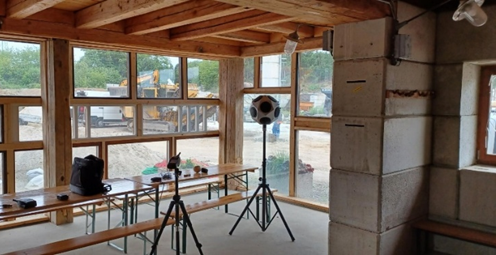
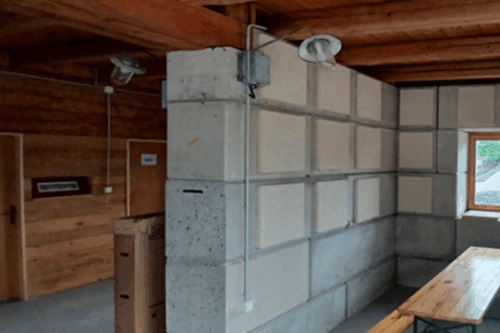
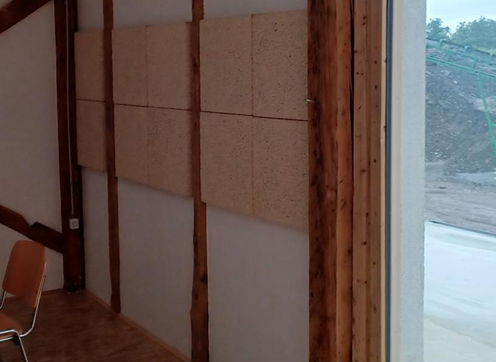
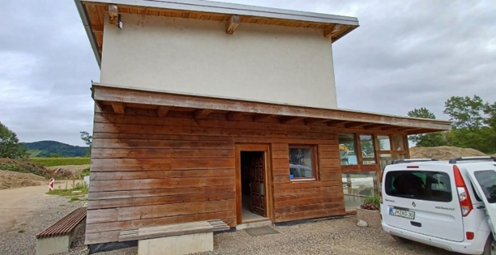
As part of this framework, sustainable acoustic panels made from hemp–lime biocomposites were installed in a pilot project in Dogoše near Maribor, Slovenia. The panels were developed in collaboration with the start-up Hempstatic and tested under laboratory conditions as well as in a real building environment. The pilot implementation took place at Partner PP3 Nigrad, with technical investigations conducted by ZAG. The project aimed to evaluate acoustic behaviour, fire performance, indoor air quality, and overall environmental compatibility.
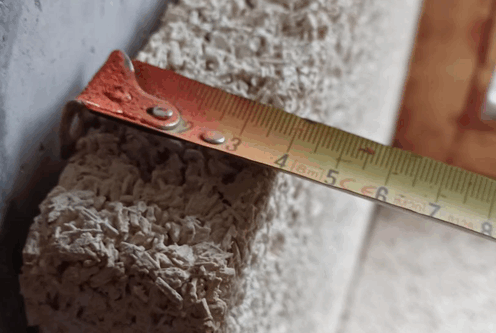
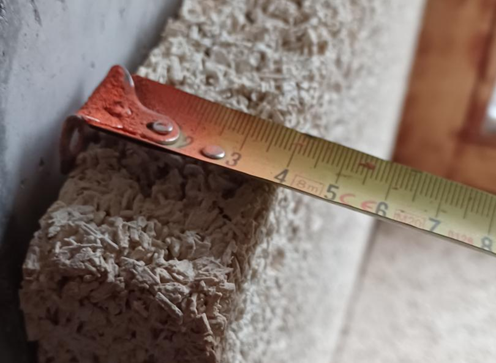
The material is based on hemp shives, a renewable byproduct of industrial hemp (Cannabis sativa L.) processing, combined with a lime-based binder and water. This biocomposite approach promotes the use of agricultural residues while reducing reliance on synthetic resources. The formulation follows circular design principles, allowing for reuse, repair, remanufacture, and safe regeneration at the end of its service life. As no toxic additives or synthetic compounds are included, the panels support a non-hazardous end-of-life scenario.
In addition to laboratory analyses, the panels were installed in selected interior spaces to assess their practical application under real conditions. A comparative environmental evaluation with conventional insulation materials was also carried out to better understand the broader sustainability potential of the system. The pilot project highlights how green and bio-based construction materials can be successfully upscaled and integrated into modern building practice while supporting long-term environmental objectives.